
Mugo partner since 2022
The First Church of Christ, Scientist launches updated online Christian Science Directory, focused on user experience and accessibility

Mugo partner since 2023
Yellowhead Regional Library launches new website platform on a tight deadline

Mugo partner since 2022
New websites help regional library system improve workflow and increase member library agency.

Sometimes, Apache Solr doesn’t index data in just the way you need for your custom search criteria. When you need to add data not indexed by default in the Solr search engine, the document field mapper should be created to fit your needs.

Having quality images on your site is important, and creating all the different versions of images for the various ways they will be used on your site is time-consuming and potentially frustrating. Letting browsers auto-render images to different sizes and shapes will cause pixelation and stretched images that don’t reflect well on your brand. The good news is that there are several tactics to automatically generate high-quality and specific versions of images to cover all the use cases.

Google Maps is an almost ubiquitous tool and can be incredibly useful to integrate into your site. There’s a lot of versatility in its uses, but depending on how much you’re asking it to do, the results might not be optimal. When you have a huge dataset to display on Google Maps, the performance tends to slow down. When that data is spread across a large geographic area, the issue can be compounded. As you zoom out and more markers try to load, your map can slow to a crawl. What was a useful tool now becomes a point of frustration for visitors to your site. Let’s take a look at the technique that can be used to improve the performance of maps with large datasets.

One of the major selling points for Google Analytics 4, when it was released in late 2020, was the inclusion of predictive analytics metrics, a Big Data feature that until then had largely been the domain of enterprise analytics packages.
Now that Google has announced that GA4 will replace Universal Analytics for all users by July 1, 2023, it’s worth a second look at how GA4’s predictive analytics can impact your business.

Mugo partner since 2016
Doctor search and bookings site, FindaTopDoc.com, offers a medical library content along with user generated reviews of specialists both online and via on-location kiosks.

The Mugo Web team recently worked with one of our long-time clients, FindaTopDoc.com, to execute a seamless migration from its existing Customer Relationship Management (CRM) system to a new platform.
This project was critical since FindaTopDoc relies on extensive use of CRM integrations to power its physician directory website. Applications range from updating doctors’ searchable listings to managing user-generated content, a pillar of the FindaTopDoc publishing strategy.

Events are the buzziest change between Universal Analytics (UA) and Google Analytics 4 (GA4). There’s a good reason for that — they mark a very substantial shift in how property owners track data on their sites. This is a daunting prospect and an opportunity. As a property owner, you will need to reevaluate how you use your analytics and how you can make the new system work for you. As you make the switch to GA4 before UA’s End Of Service date (July 1, 2023), you might be focusing on just recreating a familiar pattern and making your GA4 property look the same as your old UA dashboard; the better option is to clarify exactly what you need from your site’s analytics and leverage GA4’s superior flexibility to accomplish your goals.
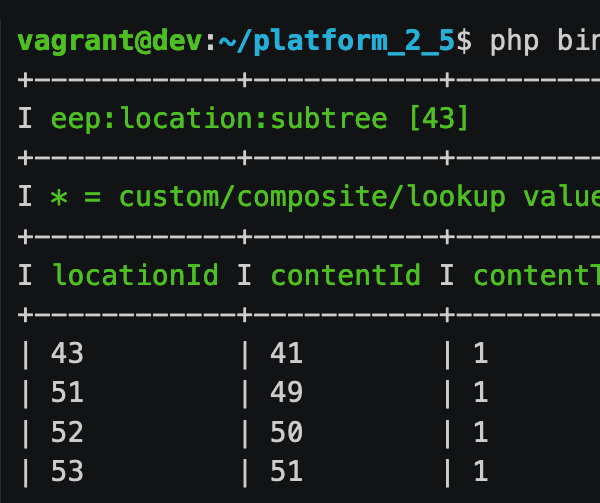
We’ve discussed eep (Ease eZ Publish) several times over the years. It’s a powerful tool we at Mugo Web have used for innovative solutions. For the uninitiated, eep is a collection of scripts to support developers working with eZ Publish. Now that eZ Publish is a legacy product, we needed a new option for eZ Platform and Ibexa DXP. Introducing eep-bundle, a collection of Symfony commands specifically selected to work with the new system! We’ll dive in and look at some of the more useful functions eep-bundle provides, such as commands to work with cache, content, content field and type, location, section, and user data.
Mugo Web
Unit 205, 332 Columbia Street
New Westminster, BC
V3L 1A6, Canada
Phone: 604-637-6396
E-mail: hi@mugo.ca