In-depth insights on content, code, and creativity

One of our clients needed to migrate all their customers to another entitlement service, requiring them to create new Single Sign-On (SSO) accounts. Concerned that many customers might struggle with the SSO setup process and overwhelm the customer support team, Mugo designed a "graduated authentication" system that dynamically balanced temporary free access with required account creation, allowing our client to manage customer support workload in real time. Instead of forcing all customers to the SSO setup at once, a smooth transition was implemented, providing immediate support for anyone who needed it.

The latest improvements to the Mugo Library platform focus on enhanced usability for library staff. Since these back-end improvements aren’t as noticeable as the front-end user experience, we wanted to take the opportunity to give a peek “under the hood”, and showcase what makes the Mugo Library event and calendar solution ideal for public libraries. Our new enhancements include expanded reporting, a new viewing interface, back-end patron search, and integration with the meeting room module.

Caching plays a critical role in the performance and scalability of websites. One of the most important tools for controlling caching behaviour is the Cache-Control HTTP header. This header defines how responses are cached by browsers, reverse proxies, and CDNs, and how long they remain valid.
In complex websites, different page types often require different caching strategies. For example, on a news website, an article page may be cached for a few hours to a day, while the homepage — where content changes frequently — may only be cached for a few minutes.

Responsive images are a cornerstone of modern web design. They enable websites to deliver optimized visuals that adapt seamlessly to a wide range of devices, screen sizes, and resolutions. By serving appropriately sized images based on the user’s device capabilities, responsive images ensure fast load times, reduced bandwidth usage, and a consistent visual experience.

Recently, we added a new feature to the Mugo Library all-in-one CMS solution for library websites to make it easier for patrons to search for their event registrations. This enhancement makes providing quality customer service in libraries easier and puts more control in the hands of patrons.

Many of our solutions use Solr as a search engine. We find that Solr can provide powerful and flexible search experiences, customizable through its configuration. In this case, we resolved an issue where very generic names of important pieces of content were making them harder to find.

HubSpot is a well-established and popular CRM that allows you to manage customer relationships. Among their marketing services, they have native newsletter management, which can help to foster a great relationship with your subscribers. Beyond relying on the default options for newsletter management, you can use the HubSpot API to tailor the customer's experience in selecting their communication preferences.

Newly revised rules from the ADA regarding digital accessibility mean libraries in the United States have until April 26th, 2026, to ensure they are conforming to WCAG 2.1 AA standards. What does this entail, and how can a library system start making content more accessible?

Recently, one of our clients came to us looking to archive an older website that was no longer being updated. The site still needed to be accessible to the public for reference purposes. Taking it offline was not an option due to its historical value.
Running the site on a traditional hosting environment meant paying for a full web server, application runtime, monitoring, and associated maintenance — all of which were unnecessary for a site that no longer required server-side processing.
If you have a legacy site that doesn’t require dynamic content, migrating it to AWS S3 and CloudFront can be a highly cost-effective solution, all while ensuring it remains accessible, secure, and efficient.

Automating website management tasks like SSL certificate renewal is a great way to save time and mitigate human error, particularly if you manage multiple websites. Learn how to automate SSL certificate renewal using Let’s Encrypt and Oracle Cloud Infrastructure DNS API.

Building a website often comes down to choosing between “best–of-breed” services and cost-effective solutions that meet your business needs while being relatively easy to manage. Here we explore AWS services for automated text messaging and email, and compare them with other 3rd party options in the context of work done for GoLibrary.
Tabbing through a web page can be a frustrating experience. The user tabs to access a menu, but with the keyboard's next tap, they’ve moved on to another page element and have to retrace their steps to access the desired content.
For users who rely on keyboard navigation, this can be a major accessibility roadblock. And for other site visitors, it’s just poor UX.
Fortunately, you can implement a fairly straightforward function in JavaScript called a “focus trap” to ensure users don’t leave the page area they’re in without intending to do so.
WordPress can be a great option for easy website development, but because of the rapid evolution of the CMS, it can lead to inefficient code and slow loading pages. We'll show you how to clean up unused CSS and JS from pages to improve site-wide performance.
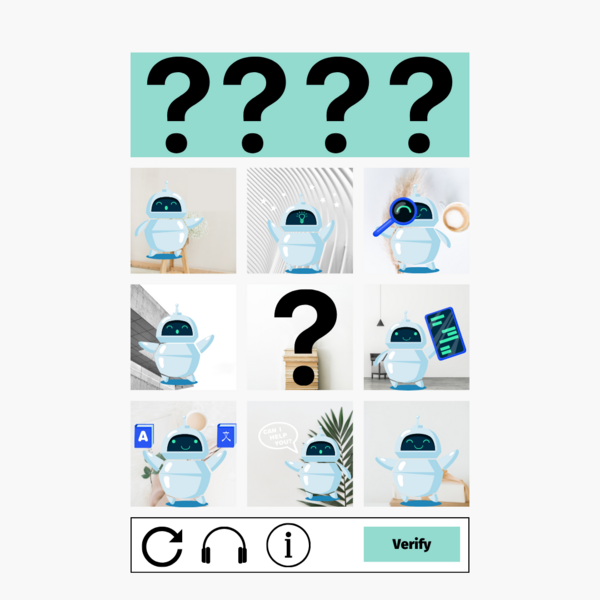
CAPTCHA is an essential need on online forms, but to be blunt, the UX sucks. Without the implementation tips (helpfully detailed below), Google’s otherwise reliable reCAPTCHA service implemented “as-is” doesn’t actually provide any browser validation. The user will have to wait for it to make a time-consuming round trip to the server. It’s a problem for anyone and becomes compounded for users with accessibility needs.

Links are among a website's most valuable components. They connect (that’s what the word “link” means, after all) different pages and resources, helping site visitors find the content they are looking for. Well-planned and formatted links are like a detailed, intuitive treasure map that sends visitors to the right destination.
Links are also critical for making your website accessible to visitors with visual or other impairments. A link that lacks important information can prevent some visitors from accessing all the treasures a website holds. Or even worse, it can send users to completely undesirable content and discourage them from exploring all your site has to offer.
In this post, I’ll discuss how to present links in various contexts, clearly explaining how they can create and inform powerful relationships between different pages and assets.
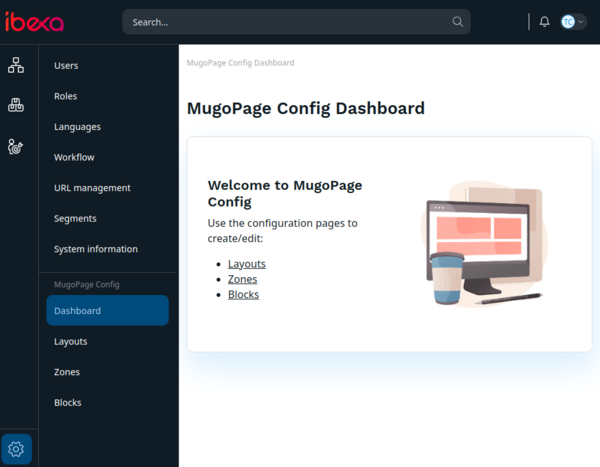
If you were used to the Open Source version of eZ Publish, you are probably familiar with the eZ Flow extension, which allows editors to build pages visually specifying the components based on a Layout, Zones, and Blocks system. Users that have migrated to the Ibexa OSS might have noticed that there is no such system available, only the Ibexa Page Builder, which is restricted to the Enterprise version.
At Mugo, we love to contribute to the Open Source community. After identifying this need, we decided to create a prototype for an alternative to the eZ Flow extensions for Ibexa OSS. With that in mind, we created the Mugo Page Bundle as a simple way to build page layouts.

In this blog post I am going to talk about several security best practices, particularly for configuring AWS Access Keys. Some of these practices are based on a project that we inherited which was compromised by hackers. Best practices are often learned from mistakes; and when the mistakes are someone else's, so much the better!

Amazon Web Services (AWS) EC2 has the reputation of being a pricey option for cloud-based hosting and compute resources. Certainly, that was our initial impression here at Mugo Web years ago when we began standardizing our hosting and site management business on a single cloud platform.
However, we quickly discovered that AWS is actually quite affordable. In fact, our monthly costs for a virtual machine using 8GB of RAM, at 100% usage, is predictably lower with AWS than with other virtualized or traditional data centers. That’s without aggressively tuning our resource usage, which is often the focus of how to optimize AWS pricing.
In this post, I’ll show you how AWS can be a cost-effective option for professionally managed websites. I’ll also take a quick look at some of the additional savings tactics you can employ to get more value from your decision to run on AWS.

Managing bot access to your website is one of the least sexy tasks a site manager handles. You just identify the bot’s user agent, edit robots.txt to allow or disallow access, and you’re done. Right?
Of course, nothing’s ever quite that simple when it comes to safeguarding your web identity. Sure, robots.txt is still the industry stalwart – it’s a tactic we often use for our clients here at Mugo Web when we want to block a specific bot for some practical reason.

With Gmail and Yahoo now requiring bulk emailers to implement authentication protocols, making sure you understand the differences between SPF, DKIM, and DMARC and how they work together is essential for your email marketing efforts. We'll walk you through how to set these up in your email provider of choice.

While YouTube embed options are powerful and effective, they are not always the most efficient use of resources when it comes to bandwidth. Using a facade can help decrease page load time and increase site performance without sacrificing any of the utility of the native YouTube embed options.
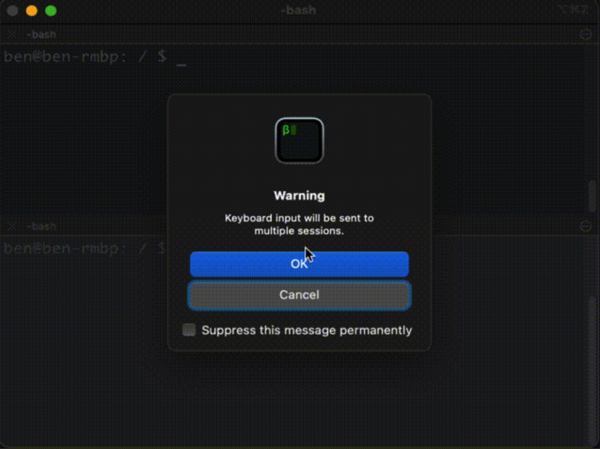
Typing the same instructions into multiple terminals at the same time is a great trick when you have a group of servers that have the same or similar configurations.

Generative AI is shaking up every category of knowledge work, and professional software development is on the front lines of the revolution. With new advancements on the horizon, what does that mean for developers in the here and now? Our team experimented with a few of the leading tools and shared their impressions, along with suggestions on best practices for navigating AI usage in web development.

WordPress has a flexible and robust ecosystem for creating a wide variety of websites. But when your site needs to grow and expand functionality, having a dedicated, experienced development team to support and build out new features is essential. Learn about Mugo Web’s best practices when it comes to developing in a WordPress environment and see how we’ve helped save clients thousands of dollars with innovative solutions.
Mugo Web
Unit 205, 332 Columbia Street
New Westminster, BC
V3L 1A6, Canada
Phone: 604-637-6396
E-mail: hi@mugo.ca